What can Curious George teach teachers about using curiosity?

Just like George your students (and you) were born with an instinctive curiosity.  How can teachers take advantage of this inquisitiveness to help students learn?  This is done by creating a mismatch between what students know and what they want to know.

Teachers can use inquisitiveness to help students learn by creating a mismatch between what students know and what they want to know.Start your lesson with a curiosity-based introduction.  Create that mismatch  between known and want to know early so the kids will stay with you until that curiosity is satisfied. The man with the yellow hat did this when he set his hat on the ground for George to explore.

You can do this by asking questions like these:

Have you ever wondered how you can tell if your brother or sister is sneaking into your room by using simple materials you may have lying around your home? (electricity lesson)

Wouldn’t it be great if we knew how to make a super giant pumpkin so we could have the biggest jack-o-lantern ever? (plant lesson)

There is a way for you to learn double the information in your history book in half the time you’d normally take. Would you like to be able to do that? (study skills)

The key to understanding other people is in knowing the body language that are displaying. (psychology lesson)

Have you ever wondered why hotdogs come in packages of 10 and buns come in packages of 8? (economics lesson)

If you want to make your bike the fastest in the neighborhood, physics is the answer. (physics lesson)

Have you ever wondered what it feels like to fly like a seagull, what would happen if you press random numbers on a phone, or what it would be like to hold a bright red balloon?  George has.  And he found out by following through with his curiosity.  If there is one thing we can take away from his experience it’s this: make sure your curiosity is always moving you in a healthy direction.  If it is – go for it!

We keep moving forward, opening new doors, and doing new things, because we’re curious and curiosity keeps leading us down new paths.- Walt Disney

Some Curious George for you:


10 Lessons from Storybook Characters

Colorful Zebra Classroom Theme Art

Colorful-Zebra-CompThis beautiful product contains what you’ll need to set up your zebra-themed classroom:

  • 17 pages of original artwork that you can cut out to use on bulletin
    boards or work stations
  • 9 table tents each in a different color to label desk groups, work
    stations, or centers
  • 9 “Happy Birthday” cards, each in a different color
  • 9 pages of stationary with beautifully patterned backgroundsColorful Zebra Classroom Theme Art - Kat and Squirrel
  • 18 pages of framed letterhead (9 colors in landscape and 9 colors
    in portrait) to print your own message in the middle for wall signs,
    anchor charts, or notes home
  • 9 pages of smaller framed letterhead in 9 colors to print your own
    message in the middle
  • 9 colors of intermediate desk plates to label students’ desks with
    their names or print on magnetic paper for a name sorting activity
  • 8 bookmarks with original artwork
  • 5 classroom posters: “Be Wildly Wonderful”, “We’re All Ears”,
    “What’s for Lunch?”, ” Where Do We Go After School?” and one
    with zebras waiting for your message.
  • 9 colors of primary desk plates to label students’ desks with their
    names or print on magnetic paper for a name sorting activity.Kat and Squirrel - Get the Artwork Now

Be sure to check out the second Colorful Zebra Classroom Theme. All artwork in this product will match the first product:  http://www.teacherspayteachers.com/Product/Colorful-Zebra-Classroom-Theme-Art-part-2-1606732

Pumpkin Picture Book Comprehension

Pumpkin Picture Book Comprehension Unit - KatandSquirrel.com

Create a pumpkin lap book with these pages to have some fun with comprehension this fall!

I’ve used this unit for the past 2 years and the students love – love – love it!  During our designated half-hour “intervention” time I am lucky enough to be in charge of the group of first graders who are reading above grade level.  I enjoy exposing them to new vocabulary words and comprehension skills.

Of course, what first-grade teacher doesn’t love a good seasonal project? We know that tapping into the students’ ever-evolving interests helps to keep them fully engaged.  And at this time of year the humble pumpkin stands on center stage!

Kat and Squirrel - Get the Lesson!

The following favorite pumpkin picture books can be used to engage your students while strengthening their comprehension skills: (Oh – and you can easily click the links embedded in the book titles for info. about where to purchase the books. – Don’t ya just love technology!)

Sequence

Pumpkin Pumpkin by Jeanne Titherington
From Seed to Pumpkin (Let’s-Read-and-Find-Out Science 1) by Wendy Pfeffer
The Pumpkin Book by Gail Gibbons
Pumpkin Circle: The Story of a Garden by George Levenson
Pumpkin Jack by Will Hubbell
Pumpkin Cat by Anne Mortimer
From Seed to Pumpkin (Welcome Books: How Things Grow) by Jan Kottke

Story Structure

Pumpkin Soup by Helen Cooper

Too Many Pumpkins by Linda White
Pumpkin Trouble by Jan Thomas
The Fierce Yellow Pumpkin by Margaret Wise Brown
The Stubborn Pumpkin (Hello Reader, Level 3) by Laura Geringer
Pumpkin Hill by Elizabeth Spurr

Fact and Opinion

Seed, Sprout, Pumpkin, Pie (Picture the Seasons) (National Geographic Kids) by Jill Esbaum

The Very Best Pumpkin by Mark Kimball Moulton
How Many Seeds in a Pumpkin? (Mr. Tiffin’s Classroom Series) by Margaret McNamara and G. Brian Karas
Pumpkin Day! by Nancy Elizabeth Wallace
I Like Pumpkins by Jerry Smath
The Pumpkin Fair by Eve Bunting

Compare and Contrast

The Biggest Pumpkin Ever by Steven Kroll
Strega Nona’s Harvest by Tomie de Paola

The Legend of Spookley the Square Pumpkin by Joe Troiano
Little Boo by Stephen Wunderli
The Problem with Pumpkins: A Hip & Hop Story by Barney Saltzberg

Cause and Effect

The Halloween Performance by Felicia Bond
Pumpkin Fiesta by Caryn Yacowitz

Pumpkin Town! Or, Nothing Is Better and Worse Than Pumpkins by Katie McKy
The Runaway Pumpkin by Kevin Lewis
The Pumpkin Blanket by Deborah Turney Zagwyn
Pumpkin Day, Pumpkin Night by Anne Rockwell

StoryContest14Also included:

Guided Writing (Main Idea and Details)

Award-winning Kat and Squirrel story.

(This story was the winner of the AMPL Short Story Writing Contest!)

Bonuses:

“Favorite Pumpkin Story” bar graph

2 Color Sheets to use to decorate the folders

Goals of the lesson

RL.1.1. Ask and answer questions about key details in a text.
RL.1.2. Retell stories, including key details, and demonstrate understanding of their central message or lesson.
RL.1.3. Describe characters, settings, and major events in a story, using key details.
RI.1.1. Ask and answer questions about key details in a text.
RI.1.2. Identify the main topic and retell key details of a text.
RI.1.3. Describe the connection between two individuals, events, ideas, or pieces of information in a text.
RL.1.4. Identify words and phrases in stories or poems that suggest feelings or appeal to the senses.
RL.1.5. Explain major differences between books that tell stories and books that give information, drawing on a wide reading of a range of text types.
RI.1.4. Ask and answer questions to help determine or clarify the meaning of words and phrases in a text.
RI.1.5. Know and use various text features (e.g., headings, tables of contents, glossaries, electronic menus, icons) to locate key facts or information in a text.
RI.1.6. Distinguish between information provided by pictures or other illustrations and inform

ation provided by the words in a text.
RL.1.7. Use illustrations and details in a story to describe its characters, setting, or events.
RL.1.9. Compare and contrast the adventures and experiences of characters in stories.
RI.1.7. Use the illustrations and details in a text to describe its key ideas.

RL.1.10. With prompting and support, read prose and poetry of appropriate complexity for grade 1.
RI.1.10. With prompting and support, read informational texts appropriately complex for grade 1.
RF.1.1. Demonstrate understanding of the organization and basic features of print.
RF.1.4. Read with sufficient accuracy and fluency to support comprehension.
W.1.2. Write informative/explanatory texts in which they name a topic, supply some facts about the topic, and provide some sense of closure.


What can Chrysanthemum teach teachers about perfection?

Chrysanthemum, the perfect name for the perfect girl.  Or so she thought until … she started school.

The change in context for Chrysanthemum (beloved only daughter to one of many in the classroom) was almost too much for her to take.  I just want to step into that book and give those little rodents a good character lesson!  But I’m going to put aside the more obvious bullying lesson for now and focus on perfection.

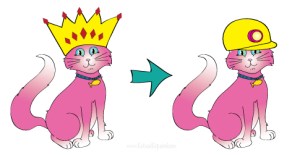
Being one of many can be hard.  Trying to do it perfectly could be impossible.  I am one teacher on a staff of many.  I leave my house in the morning a beloved queen (well – some days I do) and arrive at school to do a job that about 6 million others in the U.S. are also about to begin.  My crown is gone and my hard hat (one with the cute little light on top) is on.
Crown-to-hard-hat

Are we all trying to live up to the “perfect teacher” ideal?

The Perfect Teacher

Perfect Illustration found on “My First Step as a Teacher” Blog

It isn’t going to happen.  Let me tell you why.

We can strive to make sure our work is excellent, complete, and of the highest quality. We just need to remember to recognize that moment when better isn't any better.Perfection is inefficient. OK, I’ll admit I have tacked the yard stick to the bulletin board in order to get my letter to stay in a straight line instead of doing a nose dive.  But this kind of attention to detail in every area would be a huge waste of my time.  How much time did Victoria waste counting letters and thinking of new insults just because she didn’t like Chrysanthemum’s name?

Perfection makes it hard for others to seek your advice.  I don’t want my students and coworkers to feel that asking for help is a sign of weakness.  Failure could be how we learn best. Being able to handle setbacks is a far better trait – resiliency, dude.  If you were Chrysanthemum, would you ask Victoria for help?

Perfection is too neat.  Things need to get messy before they get good.  Idea fluency means the ability to develop lots of ideas and is an important component of creative thinking.  People can’t be afraid to offer  wild ideas because these are the stuff awesomeness is made of.  Maybe if Chrysanthemum’s parents had spent more time brainstorming baby names they would have found an even better name. Rose? Violet? Poppy? Kathryn?

Perfection = Unhappy Teacher. You could drive yourself right up the classroom wall trying to make things perfect.  Your school will benefit much more having a sane teacher over a perfect one.  Are those teachers who seem perfect to you really happy?  Hard to tell, but probably not.  I bet Victoria felt miserable after completely forgetting her lines in the class musicale.

Perfection can lead to poor choices.  Poor choices can include avoiding joining leadership committees to escape criticism, dishonesty about areas that you feel aren’t good enough, or taking on too much work because you don’t want to admit you can’t handle it all.  Chrysanthemum avoided going to school by dragging her feet and walking slowly.  The whole time thinking about her absolutely dreadful name.

I’ll admit, there is a positive side to perfection as well.  We can strive to make sure our work is excellent, complete, and of the highest quality. We just need to remember to recognize that moment when better isn’t any better.  Les Brown said it best, “Shoot for the moon. Even if you miss, you’ll land among the stars.”

Now let’s play some Parcheesi!

Some Chrysanthemum books:


And another really good book for you:

10 Lessons from Storybook Characters

What can Sam’s friend (the one who would, not could not try green eggs and ham) teach teachers about trying something new?

Are you as amazed at all of the new requirements in education as I am? Sometimes I want to say “I do not like them here or there, I do not like them anywhere!”  But that Sam is a persistent little bugger isn’t he?  And he keeps trying to make the new things less scary.

tagxego appleTry them on a boat, with a goat,
in the rain, on a train,
in the dark, in a tree,
in a car, in a box,
with a fox, in a house,
and with a mouse.

Every so often we do need to take a bite and try something new.


When it comes to trying new things it can be scary. We don’t think we’ll be capable.  We think it’s a bad idea. We don’t know where to start.  We wonder what’s next if we go through with this.

The new ideas just might be foolish if you don’t know what you’re getting yourself into. Green balut and haggis, anyone?

Before you build a better mousetrap, make sure you have some mice out there. – Yogi Berra

But every so often we do need to take a bite and try something new.  Eggs Benedict, maybe?   Dean Radin, a researcher and author in the field of parapsychology,  describes four stages of new idea adoption:


The first is “It’s impossible”
The second is “Maybe it’s possible, but it’s weak and uninteresting”
The third is, “It’s true and I told you so”
And the fourth is, “I thought of it first”


There are many times when changing and trying something new leads you to discover something delicious. Note our niece (below) as her precious face changes. Look what wonderful things you can discover – you go first!

Our niece trying fruit for the first time.  :)

Our niece trying fruit for the first time.  🙂

Ella now

Then again a few week later!


Some Green Eggs and Ham for you:


10 Lessons from Storybook Characters

What can Amelia Bedelia & Minerva Louise teach teachers about understanding literal mindedness?

1st grader: Knock, knock.

Me: Who’s there?

1st grader: Pizza.

Me: Pizza who?

1st grader: Pizza is yummy! Ha, ha, ha, ha, ha!

Me: blank expression to polite smile, “Yeah, good one.”

Yep, that’s a typical knock-knock joke told by a first grader.  Amelia Bedelia knows how to “call the roll” in her escapades as substitute teacher, but she did not know how to take attendance.

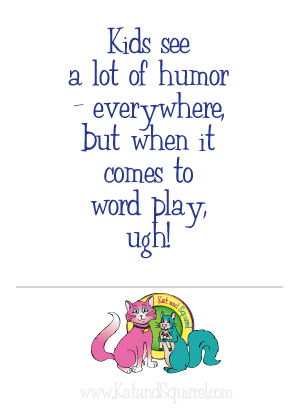
Like Amelia Bedelia – young kids just don’t get it!  They do see a lot of humor – everywhere, but when it comes to word play, ugh!  I dread the point in the school year when they discover the knock-knock joke because I know that I’m about to hear 150 of the made up “zingers” like the one above. Don’t get me wrong, I know they are trying. They realize that for some reason people get a lot of enjoyment from these jokes, but they are just too literal minded to “get it” at this stage in life.   I have always wondered about the science behind this phenomenon. (Yes, I am a nerd.)

Ellen Winner boils word play understanding down to 3 steps: (The Point of Words: Children’s Understanding of Metaphor and Irony, 1997)

In order to understand nonliteral language, the child has to

1.  figure out that the words aren’t meant to be taken literally

2. figure out the relationship between the literal meaning and the true meaning.

3. discover the meaning of the message.

For example in the following joke, a child need to go through this series of thoughts:

My brother Cody lost his CD. Now I just call him Oy.

CD  ≠CD  CD= CD = alphabet letters C & D “lost his CD” = CODY = Oy

But when does this magic happen?

Dr. Howard Gardner proposed these developmental stages based on Harvard’s Project Zero’s data. 

Under 5 years old – Wild stage  – this stick looks like a sword, or a cane, or a boat. They do not care if these associations make sense to others.
About 6 years old – stage of Domestication – very literal minded, this stick is a stick. Any metaphors they do accept, are likely attributed to magic.
About 10-11 years old –  Trainable stage – stick could be a noun or a verb. They accept multiple meanings and can explain them.
About 14-15 years old – Competent stage – They can supply reason and understanding independently.

I interpret this process as continual and context based.  Understanding dawns with simple word play that the child is familiar with.  This will be individual to each child.  The understanding will grow to include more and more complex ideas for word play.  (Please tell me if you feel differently.)


Kids see a lot of humor - everywhere, but when it comes to word play, ugh! Learn what each age group understands when trying to be funny with words. Kat and Squirrel

The wonderful series of Minerva Louise books about a curious hen is based on an earlier stage of word play identification.  I have always had much more luck with first graders understanding this word play style than the word play style in Amelia Bedelia.  I think now I am beginning to understand why.

Minerva Louise is at the wild stage of understanding.  In Minerva Louise at School, she sees the school as a big fancy barn, the cubbies as nesting boxes, and the janitor as the farmer.  My first graders recognize this less mature stage and can have a hearty laugh at her foolishness.

Reading Amelia Bedelia gets me blank stares.  “Draw the drapes” and “dress the chicken” to my little ones is interpreted the same way that Amelia Belelia interprets it.  They do understand some of the word play – especially the one where she “runs home” during the baseball game.  They are much more familiar with the double meaning of “home” than they are “draw” or “dress”.  I can imagine though that kids in the trainable stage would understand Amelia Bedelia’s less mature stage and get laugh just as hard at her foolishness as mine kids do at Minerva Louise.

So next time I ask a somber little fellow if he has the weight of the world on his shoulders, and he glances first to his shoulders before telling me “no”, I will be a little more enlightened to what’s going on in that precious growing mind.

Josie literally thinking outside the box.

Josie literally thinking outside the box.

One caveat – A common characteristic of people who fall in the autism spectrum is literal mindedness.

Some Minerva Louise and Amelia Bedelia books for you:


10 Lessons from Storybook Characters

Pair It! Parrot! Fry Words Group 3 Words 64-95

This version of the Pair It! Parrot! game includes Fry words 64-95. It also includes the original Kat and Squirrel (and Parrot) story. And the bonus is an ABC order (first letter only) using 6 of the words from the game. Practicing Fry words is a cinch while playing either with a small group or in pairs.

Goals of the lesson

Pair It! Parrot! Fry Words Group 3 KatandSquirrel.comCCSS.ELA-Literacy.RF.K.1.b
Recognize that spoken words are represented in written language by specific sequences of letters.
CCSS.ELA-Literacy.RF.K.3
Know and apply grade-level phonics and word analysis skills in decoding words.
CCSS.ELA-Literacy.RF.1.3
Know and apply grade-level phonics and word analysis skills in decoding words.

Bonus!
Soup ABC order worksheet.
Cut out the soup cans and glue them in ABC order in Squirrel’s cupboard.

Get the Game from Kat and Squirrel

The Pair It Parrot games by Kat and Squirrel

Pair It! Parrot! Fry Words Group 2 Words 32-63

This version of the game includes Fry words 32-63. It also includes the original Kat and Squirrel (and Parrot) story. And the bonus is an ABC order (first letter only) using 6 of the words from the game. Practicing Fry words is a cinch while playing either with a small group or in pairs.

Goals of the lesson

Pair it  - Parrot Fry words Group 2 KatandSquirrel.comCCSS.ELA-Literacy.RF.K.1.b
Recognize that spoken words are represented in written language by specific sequences of letters.
CCSS.ELA-Literacy.RF.K.3
Know and apply grade-level phonics and word analysis skills in decoding words.
CCSS.ELA-Literacy.RF.1.3
Know and apply grade-level phonics and word analysis skills in decoding words.

Bonus!
Soup ABC order worksheet.
Cut out the soup cans and glue them in ABC order in Squirrel’s cupboard.

Get the Game from Kat and Squirrel

The Pair It Parrot games by Kat and Squirrel


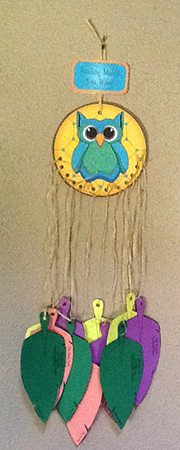
Making Connections with Owl Picture Books (Dream Catcher Project)


Read wonderful owl-themed literature and create a beautiful dream catcher to showcase student learning.

Comprehension through text connections is the focus of this super fun project.

Goals of the lesson

Owl Picture Book Lesson - Kat and SquirrelPractice “close reading” through text connections.
ELA-Literacy.RI.1.3 Describe the connection between two individuals, events, ideas, or pieces of information in a text.

Included in this product:

  • 3 owl/dream catcher graphics with gorgeous color combinations
  • 1 black and white owl/dream catcher graphic
  • Photos of the final project
  • Background information page for the teacher
  • 3 “making connections” posters to display as a reference for students
  • 18 sets of “feathers” with suggested owl-themed literature
  • 2 sets of blank “feathers”
  • And an original Kat and Squirrel story with set of “feathers” to match
    (Psst – The Squirrel has seriously outdone herself with the illustrations for this one!)
  • Bonus – Owl Fact Word Find!!

So much owl fun packed into this project. It could keep kids interested for weeks! And learning of course, but don’t tell them. 😉

Kat and Squirrel - Get the Lesson!

The Possible Owls Books to Use:

Owl Dreamcatcher - Kat and Sqiuirrel

Owl Moon by Jane Yolen

“I’m Not Santa!” by Jonathan Allen

Owls by Gail Gibbons

The Owl Who Was Afraid of the Dark (Jill Tomlinson’s Favourite Animal Tales) by Jill Tomlinson

The Owl Who Hated the Dark by Earle Goodenow

Little Owl’s Night by Divya Srinivasan

Good-Night, Owl! by Pat Hutchins

The Little White Owl. Tracey Corderoy, Jane Chapman by Tracey Corderoy

The Owl And the Woodpecker by Brian Wildsmith

My Little Book of Burrowing Owls (My Little Book Series) by Hope Irvin Marston

Owl Babies by Martin Waddel

White Owl, Barn Owl: Read and Wonder by Nicola Davies

Baby Owl (Nature Babies) by Aubrey Lang

Why the Owl Has Big Ears Retold by Mike J. Preble

Adopted By An Owl: The True Story of Jackson the Owl (The Hazel Ridge Farm Stories) by Robbyn Smith van Frankenhuyzen

The Happy Owls by Celestino Piatti

Little Owl Lost by Chris Haughton

Owl at Home (I Can Read Book 2) by Arnold Lobel

Kat and Squirrel and the Winter Solstice by Kathryn Gjerseth
(INCLUDED IN THE LESSON)

Kat and Squirrel and the Winter Solstice - KatandSquirrel.com


What can Pete the Cat teach teachers about looking at the bright side?

Do not let your job stress you out!  Are you kitten me right meow? No really – you can do it, just use Pete’s technique of turning a negative situation into a positive one.  You’re going to have difficult days where you feel like you just stepped into a pile of mud, but you’re also going to have great days when all the mud is washed away.

Like Pete's advice "it's all good", self talk goes a long way in diminishing teacher stress.Like Pete’s advice “it’s all good”, self talk goes a long way in diminishing teacher stress.   I love the idea of changing negative self talk into an empowering question.   If you find yourself thinking, “This class just won’t be quiet,” try changing that thought to “How can I encourage this class to be quiet?”  Or if you’re thinking “They never remember to start a sentence with a capital letter,” change that thought to “What can I do to help them remember to start a sentence with a capital letter?”  This way you’re not avoiding problems, but you are tackling them in a positive way.

Oh, and we all know that Pete loved to walk around singing his song.  Pete just might be on to something there.  Did you know studies have shown that “playing and listening to music benefits both mental and physical health?”  Listening to music can increase immunity (disease fighters), decrease cortisol (stress hormone) levels, and increase dopamine (feel good chemical).  Wow, and all for the price of a song.  No meds needed.  Try playing soothing background music in your classroom to see if you and your student reap the same benefits as Pete.

Remind yourself to sing Pete the Cat’s phrase “it’s all good”  when you’re stressed to get your groovy calm back. That’s how I roll.

Watch author Erik Litwin perform Pete the Cat I Love My White Shoes.  You’ll feel better 🙂 Really.


Some Pete the Cat items:


10 Lessons from Storybook Characters